
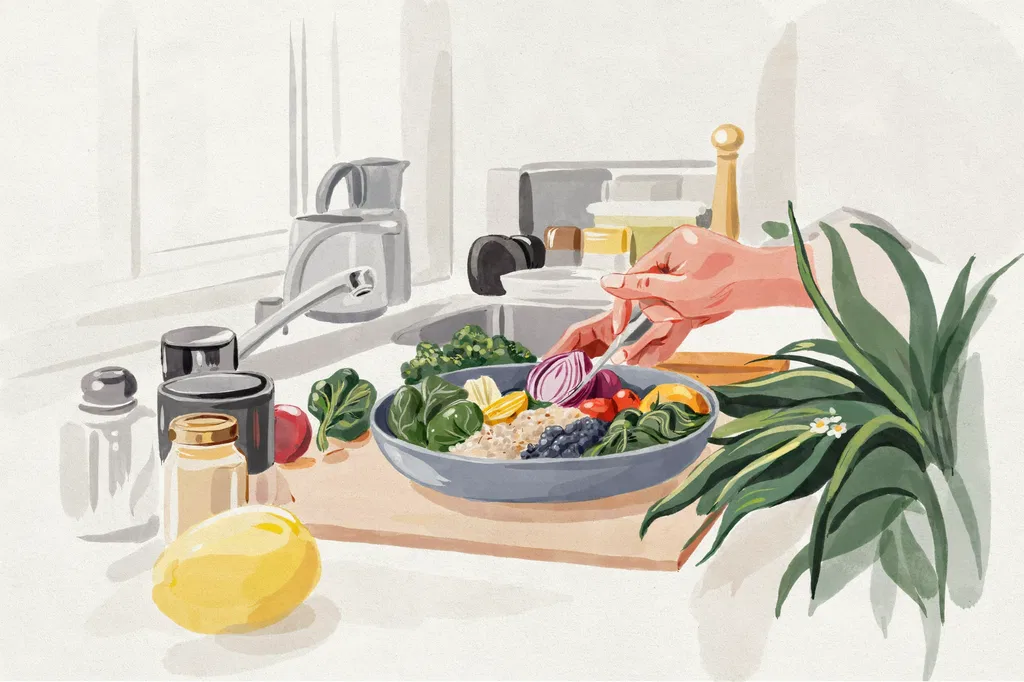
Build meals around variety
When it works for your budget and preferences, include a mix of vegetables or fruit, protein foods, grains or other starchy foods, and sources of healthy fats. You do not need every meal to look identical.
Make one helpful addition
Instead of focusing only on foods to avoid, think about what you could add. That might be a piece of fruit, an extra vegetable, beans, eggs, yoghurt or another food that suits your needs.
Keep a few easy meal options
Choose two or three simple meals you can prepare on busy days. A familiar breakfast, a quick lunch and one easy dinner can reduce the pressure to invent something new every day.
Plan around your real week
Look at the days when you will have less time. Prepare ingredients ahead if that helps, use leftovers safely and keep convenient options available. Planning should make life easier, not more demanding.
Make hydration easy to remember
Keep water where you can see it, drink with meals or pair a glass of water with a regular daily activity. Individual fluid needs vary with health, climate and activity.
Be flexible with food
Culture, access, appetite, budget and health needs all shape the way people eat. There is no single perfect menu. If you have a medical condition or specific dietary needs, seek advice from a registered dietitian or qualified health professional.
Keep exploring
Find more practical ideas in the Wellnest journal or explore the Healthy Living collection.