
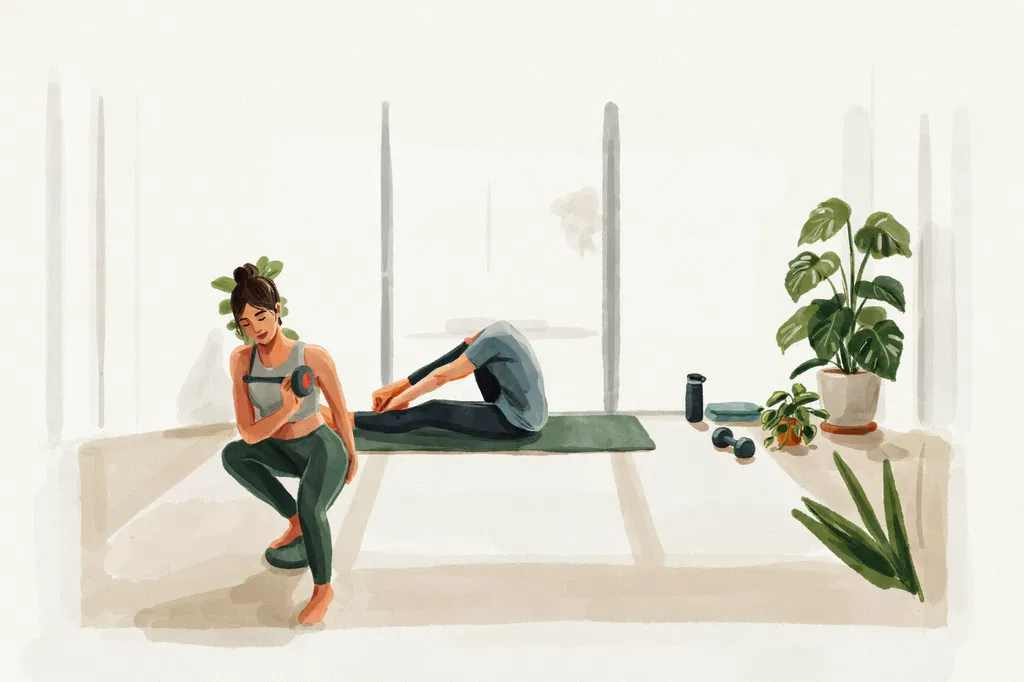
- A gentle warm-up
- Five simple movement options
- Ways to make each movement easier
- How to pace sessions and recover
Starting a workout routine can feel oddly complicated. There are routines to compare, equipment lists to buy and videos that make a beginner feel like they have already missed a few chapters.
Let's make the first step smaller. This guide offers a few familiar bodyweight movements you can adapt at home. You do not need to complete every movement or follow a fixed number of repetitions.
Before you begin: make a little room
Choose a clear, non-slip space where you can move without bumping into furniture. Wear comfortable clothing and keep a sturdy chair or wall nearby for support. Have water available if you want it.
Use the talk test as a simple guide to effort: begin at a pace where you can still speak comfortably. This is a practical starting point, not a medical measurement.
Warm up for three to five minutes
Walk around the room, march gently in place, roll your shoulders and move your arms through a comfortable range. Keep the pace easy. The aim is to prepare, not to tire yourself out.
Five beginner-friendly movement options
Chair sit-to-stand
Sit near the front of a sturdy chair. Lean forward slightly and stand if comfortable, then sit with control. Use your hands for support or practise a smaller movement.
Easier option: use a higher, stable seat and your hands.Wall push-up
Place your hands on a wall at a comfortable height. Bend your elbows to bring your chest a little closer, then gently press away.
Easier option: stand closer to the wall and reduce the range.Supported heel raises
Hold a sturdy support, rise onto your toes if comfortable, then lower slowly. Keep your movement controlled.
Easier option: lift your heels only slightly.Standing knee lifts
Hold a chair or wall and lift one knee a little, then the other. Keep your torso steady and move at a comfortable pace.
Easier option: shift your weight from side to side without lifting.Glute bridge
If getting down to the floor and back up is comfortable, lie on your back with knees bent and feet supported. Gently lift your hips a small amount, then lower.
Easier option: skip this movement or ask a professional for a suitable alternative.Put together a short first session
Choose two or three movements from the menu. Try a few comfortable repetitions or a short period of movement, then rest. One round is enough for a first try. You can stop while you still feel you have something left.
There is no single repetition target that suits every beginner. Your range of motion, balance, health, experience and energy all matter. Quality and comfort are more useful than rushing through a number.
Modify without feeling you have to apologise
Use the wall. Take a longer rest. Reduce the movement range. Choose a chair-based option. Leave out anything that does not feel right. Adaptations are not shortcuts; they are how a routine becomes more accessible.
The best starting point is one you can approach with confidence and repeat safely.
Give recovery a place in the plan
Start with a schedule that fits your life, perhaps one or two short sessions while you learn what feels comfortable. Everyday movement such as walking or gentle mobility can complement structured sessions when appropriate. Rest when you need it.
If a movement causes pain, stop and reassess rather than pushing through. New or persistent symptoms deserve individual advice.
How to build from here
After a few sessions, ask what felt manageable, what felt awkward and what you would like to practise. Change one thing at a time: perhaps add a movement, extend a session slightly or repeat the same simple routine for another week.
There are no affiliate product links in this article at present. Any future equipment recommendations will be checked for relevance, current product details and destination accuracy before publication, with disclosure beside the links.